
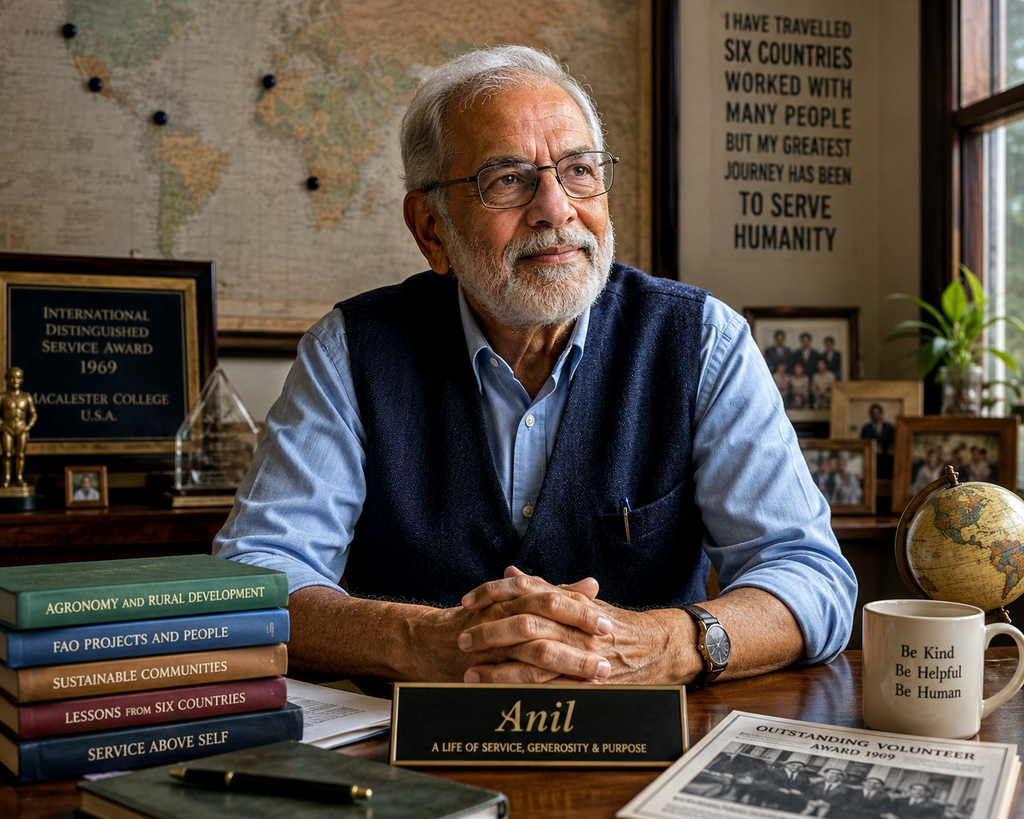
Why Did Anil Deserve Better?
There are some people whose lives cannot be measured simply by wealth, position, or material success. Anil is one of them. Highly educated and widely experienced, he spent much of his life serving others. He worked in six countries, took on challenging assignments, and received international recognition and awards for his contributions. Yet, despite all that he achieved, perhaps his greatest quality was not his education, career, or awards—it was his generosity.
Anil believed that whatever he had was meant to be shared. He was generous to his siblings and friends, often helping them without expecting anything in return. When someone needed money, advice, encouragement, or practical assistance, he tried to help. He gave away much of what he had accumulated through a lifetime of hard work. He performed numerous favors for people simply because he believed it was the right thing to do.
But life taught him a painful lesson: generosity does not always produce gratitude.
Some of the very people Anil helped eventually disappointed him. Some siblings did not treat him with the affection and respect he deserved. Friends for whom he had sacrificed time, money, and energy sometimes disappeared when he needed understanding or support. There were occasions when he was treated poorly by people who had benefited from his kindness.
That raises a difficult question: Why does a good person sometimes receive such poor treatment from others?
Perhaps because goodness can be mistaken for weakness. A person who is always willing to help may be taken for granted. Someone who rarely says “no” can become the person everyone expects to rescue them. And when generosity is repeatedly available, people may forget that behind it is a human being with feelings, disappointments, and needs of his own.
There is another painful truth. We often expect the people closest to us to understand our worth. But closeness does not always produce appreciation. Sometimes strangers recognize our value more clearly than relatives or old friends.
Anil’s story therefore is not simply a story of disappointment. It is also a story of character. He remained honest. He continued helping those who genuinely needed help. He did not become cruel simply because others had been unkind to him. His generosity was a choice, and his goodness was part of who he was.
But being a good person does not mean accepting endless disrespect. Perhaps one of life’s final lessons is that generosity needs wisdom. Helping others is noble, but a person must also protect his dignity, set boundaries, and recognize who truly values him.
Anil deserved better—not because he was highly educated, internationally recognized, or financially generous, but because he treated people with humanity.
If some people failed to appreciate him, that does not diminish his worth. Sometimes the tragedy of a good heart is that it gives too much to people who understand its value only after it is gone.
Leave a Reply