Pritilata Waddedar Matangini Hazra
Two very brave women who gave their lives for the independence movement in India are remembered here because they made the ultimate sacrifice that made them heroes that the succeeding generations should never forget.
The struggle for freedom in India started long before 1857 and culminated in the uprising in 1857 called Sepoy mutiny by the British when a Hindu soldier of the British army named Mangal Pandey in Kolkata attacked and killed his British officer. This was the trigger that led to the massive uprising of Indians against the British in many parts of Indias garrison towns like Meerut, Lucknow, Allahabad, Kanpur, Kolkata and Jhansi just to name a few places.
I have written about the Queen of Jhansi Lakshmi Bai and how bravely she fought and died in the battle at the age of less than 30 but there were many such heroes who sacrificed their lives for the cause of freedom of India.
Perhaps the hardest fought battle was in Lucknow where thousands of British men, women and even children died in a place called The Residency that was completely surrounded by the rebellious troops and bombarded day and night to reduce it to rubble. The siege of The Residency was lifted when the loyal troops of the British army arrived from Kolkata and retook the city.

the Lucknow Residency ruins
They hanged thousands of Indians wholesale as revenge in Meerut, Lucknow, Allahabad and many other cities but the flame of the desire for independence burned bright in the hearts of millions of Indians so the struggle continued.
There were great freedom fighters in this long struggle about whom I have written of, like Netaji Subhash Chandra Bose who led the Indian National Army (INA) against the British and fought tooth and nail.
I will write today about two very brave women who gave their lives for the cause and are called national heroes in India, although the outside world has probably never heard of them.
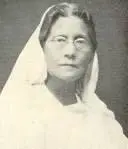
Matangini Hazra: 19 October 187029 September 1942

Matangini Hazra
She was one of the most groundbreaking female revolutionaries who actively took part in the Indian Independence Movement. She was popularly known as Gandhi Buri, a Bengali name which means old lady Gandhi, for her affection and humbleness as a fighter.
Most of her early life is vaguely known, except for the fact that she was born in a small village of Hogla near Tamluk. As she was born to a poor family, she had not been through any formal education. Around 1905, eventually, she was married at a very early age and was widowed at the age of 18 with no offspring.
She became active in the Gandhian movement in Midnapore, where most women were stepping in for the revolution. She started being active for the Indian National Congress and later started spinning her own khadi as the act of non-cooperation movement (a movement in which all the Swadeshi products were being used). She was placed behind bars for breaking the Salt Act. She also protested the abolition of the tax. For all this, she was incarcerated for 6 months in Baharampur. The home spun cotton clothes are called khadi.
She was so devoted to the struggle that at the age of 73, when the Indian National Congress planned for the Quit India Movement, Matangini herself led a procession of six thousand supporters with the intention of taking over Tamluk police station. In a tragic turn of events, when the procession reached the outskirts, they were ordered to disperse under section 144 of IPC.(Indian Penal Code). Still, Matangini stepped forward and was hit by a shot. She wanted to plead not to open fire but the situation went out of hand and she marched forward in spite of being shot numerous times. She never stopped chanting Vande Mataram and died with the flag of the Indian Congress in her hands. She was 73. Vande Mataram means Mother I salute you.
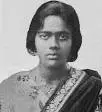
Priti lata Waddedar: 5 May 191123 September 1932

Pritilata Waddedar
Pritilata Waddedar was one of the leading Bengali revolutionary nationalists. She was born in a small village called Dhalghat in Patiya Upazila of Chittagong (now in Bangladesh). Her father was Jagabandhu Waddedar and mother Prathibhamayi Devi.
Waddedar was a title honored to one of the ancestors of her family, who was previously known as Das Gupta. She was inspired by the Nationalism of Rani Lakshmibai in her childhood. She attended Dr. Khastagir Government Girls School in 1921 and after standing first in the intermediate examination of Dhaka board, she enrolled in Eden College, Dhaka.
She then became an active member of the group Sree Sangha headed by Dipali Nag, under the banner of Dipali Sangha. She then came to Kolkata to study in Bethune College and decided to join the independence movement after meeting Master Da Surya Sen and Nirmal Sen in their Dhalghat Camp. She was one of the pillars of Revolutionary movements by Surya Sen.
She took part in many raids on Telegraph and Telephone offices and in the Jalalabad battle, she was responsible for supplying the explosives. She fought like a relentless, brave fighter, with the British even after being injured. She swallowed cyanide and committed suicide because she did not want to surrender herself to the British Police.