
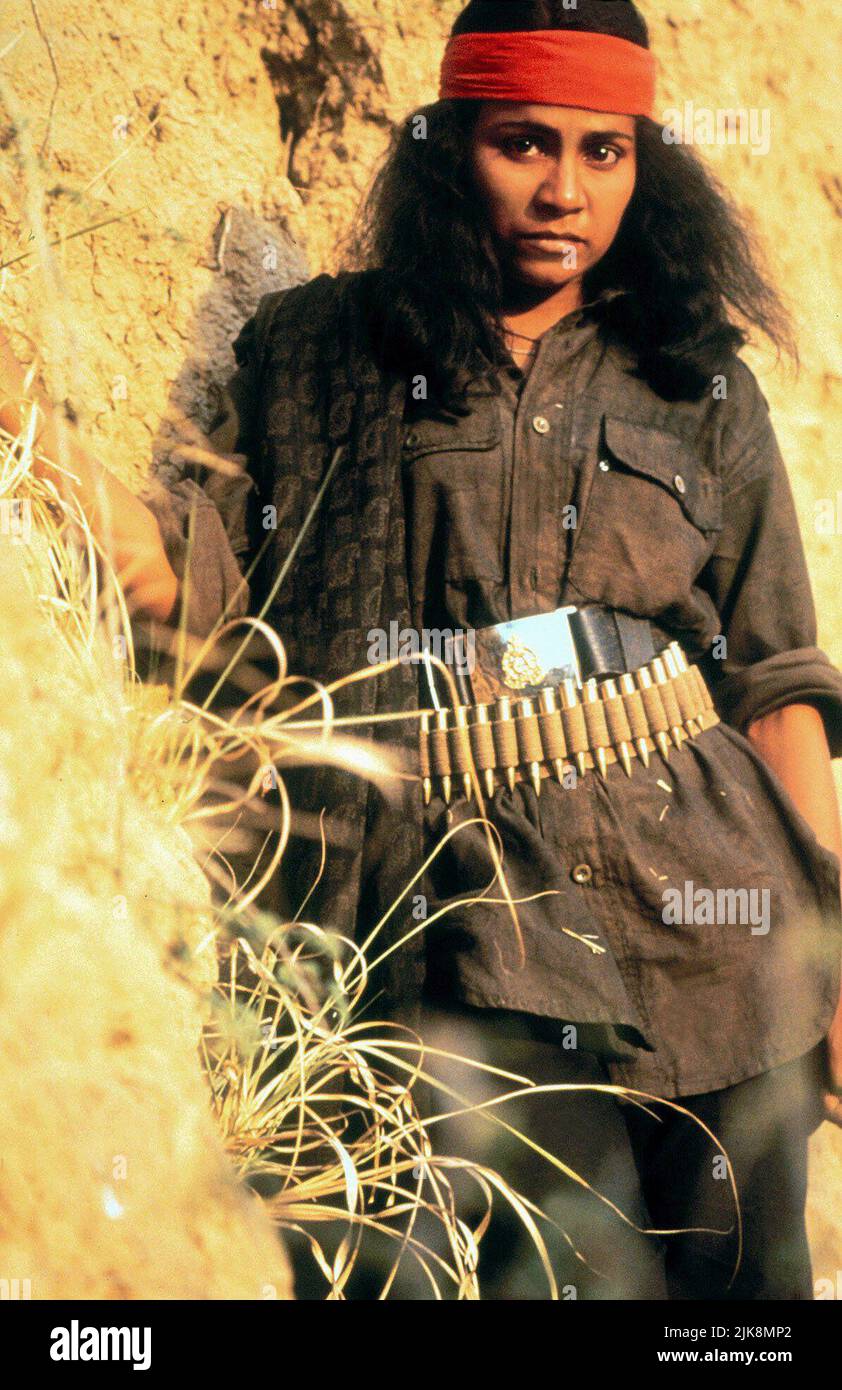

This is a true story of an illiterate village girl in India who stood up to people who raped her and tormented her just because they could get away with it, but they did not know that they could not get away with it. They paid for it with their lives.
Phoolan was born in a very poor family in a remote village of North India, where her parents lived a precarious life of hopelessness and despair. They were the low caste people whom the upper caste villagers disdained and would not allow Phoolan to draw water from their well. The rigid caste system of India persists because it protects the advantages it gives to the upper caste people at the expense of the low caste people like the Phoolans in India. Many social reformers have tried to discredit this inhuman system but to no avail because the upper caste people see no reason to give it up and treat low caste people fairly as human beings.
When this girl was still very young, meaning less than 13 years of age, she was hastily married off to a much older man also illiterate and of low caste who routinely beat up his very young wife and repeatedly raped her. She was still a child and cried due to his brutal attacks on her sexually and physically, but was unable to leave him and go back to her parents. In India, the parents often wash their hands off once they get their daughters married and leave their fate in the hands of the husbands and their relatives.
Before marriage, she was routinely sexually harassed by the village youth hence the hasty marriage but the marriage did not solve her problems but made her life truly miserable. So one day she ran away from her brutal husband and went back to her family asking their help, but they said that they could not do anything and advised her to go back to her husband.
So she sought the help of a cousin who was sympathetic to her cause and gave her shelter but his wife hated the girl and treated her abominably. Still she stayed and persevered because she had no one to go to and tried to figure out what to do with her life. She was about 18 years of age by now and in good health in spite of all the beatings and hardship.
Then one night some young men of the village caught her alone and gang raped her. There were 20 of them who took turns while people who heard her shrieks shut their doors and ignored because she was after all an out caste, illiterate girl who was wandering around late at night alone, so maybe she deserved it. They left her bleeding and in terrible pain in the dirt and laughed after giving her a lesson because they said she was too sassy.
Finally, she got up and somehow made it back to her cousin and told him how she was gang raped by no less than 20 men whom she identified and asked his help in reporting it to the police, but he told her that the policemen are upper caste people who rarely investigate the rape of a low caste woman and bring the culprits to justice.
In desperation, she then asked him to introduce her to the gang of bandits who lived in the ravines called behar. They were the outlaws, but they chose this life because they too were victims of injustice in the hands of the upper caste landlords so they became the outlaws and killed the landlords whenever they could and then fled to the ravines where the police could never find them. They were like the modern day Robin Hoods. I had earlier written about Man Singh who was a real life Robin Hood who helped people whom the rich landlords abused with impunity, but one day the police caught up with him and shot him dead.
This group of outlaws hiding in the behar (eroded badlands are called Behar)was sympathetic to the plight of this young girl who was so brutally raped and promised her revenge. She stayed with this group, learned to use firearms and the tactics of attack, and after some time took over the leadership of the gang with one burning desire that was to take revenge on her rapists.
So one day she found out that all the rapists were in the village due to some village affair so she made meticulous planning and showed up with her gang at midnight when the moon was full and dragged out all the 20 men from their beds one by one and locked their doors from outside. She and her gang members then tied up all the men to posts in the center of the village and taped their mouth. The terrified men did not know who this woman was and why they were dragged out like this in the middle of the night but knew that nothing good was to come out of this.
The young woman also brought out her very abusive husband, tied him up and taped his mouth shut. They all trembled in fear and begged for mercy, but she said that the day of reckoning had finally come for all of them who had raped her so brutally many years ago.
At her command, they opened up with machine gun and shot all of them dead, while the villagers who heard the shots trembled behind closed doors but could do nothing. The next morning, they saw the 21 bodies covered in blood and flies. The vengeance was so terrible that each person had been shot multiple times.
The news of this massacre spread far and wide that alerted the police who then started a massive manhunt for this gang of outlaws headed by a woman who were very elusive. The outlaws struck anyone found to be guilty of abusing poor landless farmers or anyone. Often a poorly written paper warning of what was to come was pinned on trees or branches.
Women in India applauded the courage of this woman who had taken such revenge on her abusers and wondered at her courage because many women in India are victims of such outrage and can do nothing but silently tolerate their abusers. But the policemen hunted her day and night without success until a great social worker called all the outlaws to come to his meeting and formally surrender themselves to the authorities, who had promised them amnesty if they brought in their weapons and other comrades.
The life of an outlaw is harsh and pitiful because they are always on the run. No one dared to give them shelter or food and some worked for the police as informers, so one day she along with her companions came to the meeting organized by the social worker and laid down her arms and surrendered. This was a big news and was covered by all the media nationwide. She was hailed as the bandit queen who had finally surrendered.
She did not realize how popular she had become and how unpopular she was with the policemen and the women who had become widows in her native village so the fire of revenge burned bright on their side now and they sought an opportunity.
The bandit queen realizing that she was greatly admired for her courage in taking revenge and seeking justice this way then started campaigning seriously for election to the parliament and won a seat. She was now a parliament member and was accorded all the privileges such a post gave her, including bodyguards because her life was still in danger in spite of the amnesty.
But the policemen and the villagers never forgave her and blamed her for the death of their husbands and relatives, ignoring the fact that they were the ones who had committed a crime when they had raped her. This culture of impunity is widespread in a caste based society, where people of lower caste are routinely abused even today. Most policemen belong to the upper caste, who come from the land owning class.
One day the assassins caught up with the retired bandit queen and a parliamentarian shot her dead, bringing her tumultuous life to an abrupt end.
This injustice towards the poor people that continues even today has given rise to rebels like Man Singh and Phoolan who saw no choice but to take up armed struggle to seek justice that was denied them by the police and the authorities. They were the modern day equivalent of Robin Hood, whom people loved and admired for their courage to stand up to very bad people, even at the cost of their own lives. Not many people have such courage, so Phoolan will always be remembered by all oppressed people of India.
If you watch the movie The bandit queen with English subtitles, it will tell you the whole story of Phoolan, so I will not try to preempt her story. I will just say that the story of Phoolan is inspiring and marks her as the most courageous girl who set up an example of bravery to inspire and motivate all poor people who suffer daily and feel helpless in India and in other countries. Being born in a low caste in India is a curse that they suffer from with no respite for it even though the government encourages them with free education and guaranteed jobs.
The caste based society among the Hindus is an outdated system that is perpetuated in the name of religion and tradition, although the Indian Constitution says that all people are equal and have equal rights but traditions and social rules are much harder to change than what the Constitution says so this discrimination continues.
The government has made tremendous progress in giving lower caste people better opportunities in getting education and jobs, but it is still a steep hill to climb for many, specially in rural areas where the abuses continue.
The original concept of caste was based on safeguarding privileges of higher caste people who enjoyed land, property, education and wealth at the expense of low caste people so they are not eager to give those privileges up any time soon. It is just like the slave owners in America, who fought hard to continue slavery because they benefited from it.
The low caste people clean the toilets, sweep the roads, collect the garbage, work as landless farmers, do all the work that the upper caste people hate to do so the system continues. The stigma of untouchability is added to the poor people to make them more downtrodden so that they are always kept in their place although with education and job opportunities some are improving their lives that were not possible before independence. Still, it will take a long time to change the mentality of the upper caste people who denigrate these people, although they feel that their days as superior human beings are numbered with the result of the dilution of their privileges.
Now imagine an upper caste person who has to clean his toilet and collect the garbage or farm his own land. This is not easy for him to accept because that is not the tradition.
As India makes progress toward modernization with rapid infrastructure development all over the country, the class and the caste structure is coming under pressure. Now the children of the so-called low caste people get education and get government jobs so they do not have to sweep the road and collect the garbage like their parents.
But the stigma still prevails. The children of slaves who now have education and jobs in the United States are still treated badly by the white policemen who just can not accept that blacks are equal to the whites so throw them in jail for minor traffic violations and a broken tail light while a white teenager who rapes a girl is given a suspended sentence by the white judge and a slap on the wrist only.
So it will take many more generations for the low caste people in India to take their rightful place in the society with the help of the government and the private sector so that one day all people will be treated equally under the law, and no one will enjoy impunity if he commits a crime.
Such a change will come only if there is a change of heart and people are treated with respect and consideration irrespective of their social status and background. I can see the outdated social system of caste slowly crumbling and may someday usher in the era of equality for all, but it is a very, very slow process.
So what do young women do who are raped by village thugs with impunity, whom the policemen will not investigate? Will they too become bandit queens and end their lives in bloodshed? Is there no hope for abused women worldwide? Who they will run to for help?
To change the mindset of the upper caste people to make them see the poor people as human beings with all the rights the constitution gives them is a long and slow process that will take generations of education and swift justice for the offenders. As long as the social injustice the poor people suffer from continues, many more Phoolans will step up against all odds to challenge the status quo because this is an ongoing struggle for justice and will not end until all Indians get equal rights irrespective of their social status.
The prejudice of caste is widespread in India among the Hindus who look down on the low caste people called the untouchables that lead to often tragic consequences. There needs to be more social awareness to redress this problem. This tells a story of how the low caste people are fighting back.
They will need help to do it legally so they have to be encouraged to get free education and jobs later to get them out of poverty. It is happening slowly but needs to be speeded up so that one day all poor people of any caste will enjoy the freedom of living with self-respect, dignity and security even in rural India where the inequality is the greatest.
The inhuman treatment of the African slaves in the United States gave rise to the civil war to free them, but the mindset of people that favored slavery is still persistent there that breaks out in racial discrimination in many places. In India the social discrimination against the lower caste people, the untouchables and the backward tribes continues in spite of all efforts short of civil war and will continue in the future until the caste system is completely dismantled, although it is easier said than done.
The older generation that believes in the caste system and in the untouchability of human beings passes on this belief to the next generation so the practice continues. Now it is up to the young and educated generation to fight this corrupt practice to eliminate it totally from India, but it is a very difficult thing to do, although not impossible.
No one thought that one day the slaves in America would really be free but a young lady called Rosa Parks defied the discrimination born out of slavery and stood up with great courage to fight it. Although it was a small step at first, soon it became the Tsunami to wash away all the inhumanity of slavery and the discrimination that came because of it. All great things start with the small steps some courageous people take, who often pay for it with their lives. Phoolan did the same and died for it.