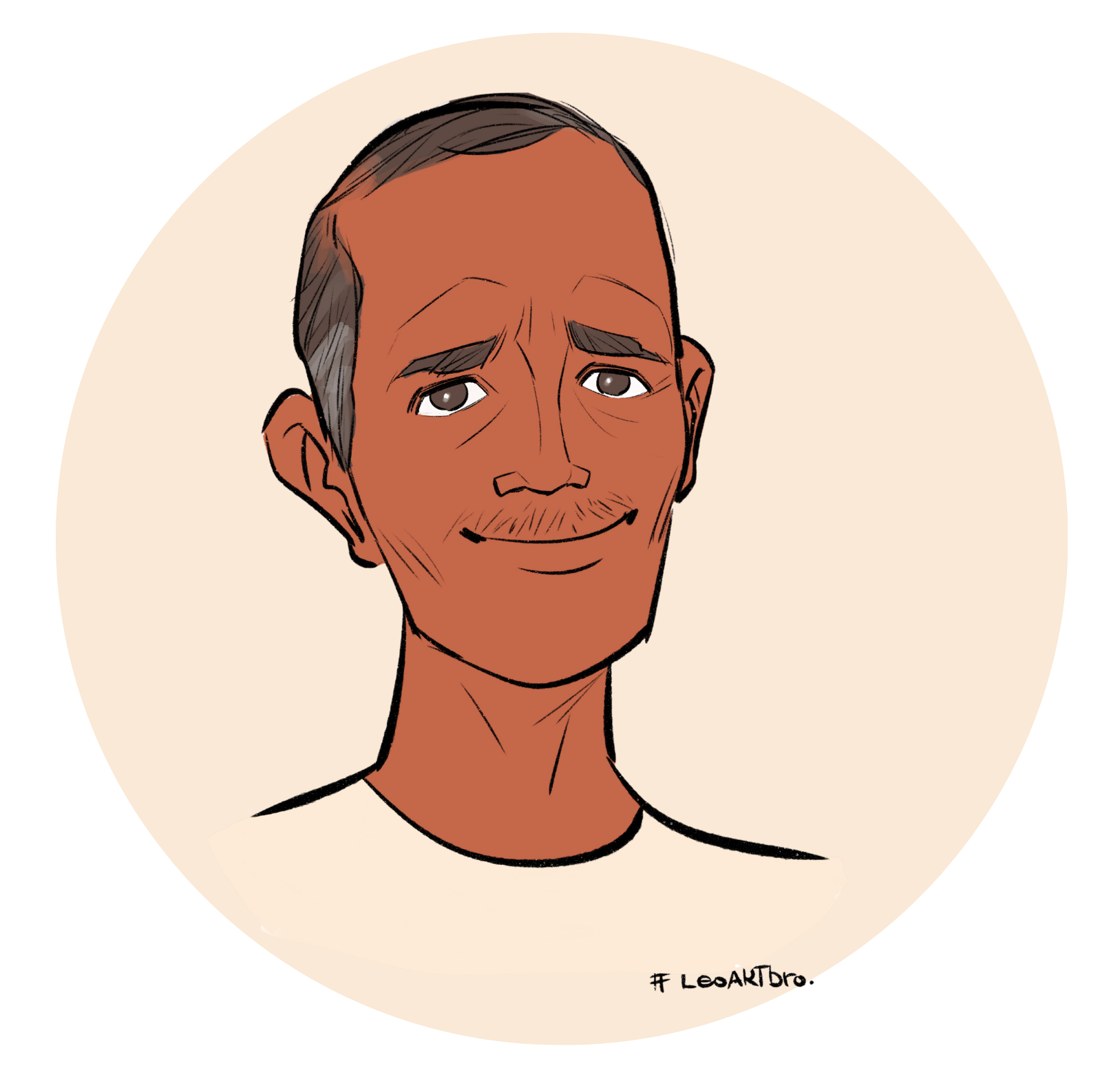

There is no person as important as Netaji Subhash Chandra Bose in the history of Indian struggle for its independence from the British. Although the whole world remained ignorant of the sacrifice he made to free India from bondage due to the suppression of his life from the history books by the people who ruled India since 1947, he stood tall as the national hero who fought the British tooth and nail to make them leave in 1947. This highlights Netaji Boses role in the armed struggle for Independence but also unveils the real story of a hero who returned to India to serve the country and to show that he did not die in a plane crash in Taipei in 1945.
Today I want to write about the word Netaji, what it means and why it is important in the context of the changes taking place in India today.
To understand who was Netaji and why the country venerates him and his contribution to free the nation from the bondage the British imposed on it to rule it for over two hundred years today I will try to explain why Subhash Chandra Bose was called Netaji or a great leader and why there has been no other person who could take his place in the history of the struggle for Indias freedom.
Why Netaji Bose was sidelined by the people who sought power to rule the independent India and why he was not given the honor and recognition he richly deserved by those who were afraid of him who brought independence to India through his armed struggle.
They were afraid that their fake narrative of Gandhi and Nehru would be exposed, and their public support would vanish if the truth about Netaji came out so they erased his story from the pages of history. His photo was not placed in the Parliament, books on him were banned, his statues were not placed in prominent places anywhere, his sacrifice to make India free was not recognized by the ruling party headed by an autocrat who was chosen by the departing British to serve their interest even after independence.
So Netaji remained an enigma to most people because his memory was suppressed by the people in power for 70 years, but Netaji remained in the hearts of millions of countrymen and women. The lies about Netaji were repeated so many times that the younger generation born after independence became apathetic, and some believed the lies until the wheel of time turned. The movie Gandhi was funded by the Congress party that was in power in Delhi to glorify Gandhi and Nehru at the expense of heroes like Netaji and many others who were not shown at all.
The history books written by the sycophants of the Congress party disappoint the readers who want to know more about Bose but find very little so one has to look for other sources for information on Bose that are plentiful. There are many people who have dedicated their life to unveil the forced secrecy on the life of a national hero who was ignored and sidelined by those who claimed all the credit of the freedom movement.
The British admitted that they left India in 1947 because they knew that they had lost the support of its armed forces and the police that was brought about by Netaji Bose by his armed struggle to free India. The Indian soldiers of the British army joined the Indian National Army of Netaji Bose in large numbers to fight the British, whom they had served before. The British also said that the role of Gandhi and Nehru in the independence movement was minimal. They said that Netaji and his army had shaken their confidence to rule India so they chose to leave.
I must mention very briefly that Netaji Subhash Chandra Bose was educated in England, but he chose not to work for the British in India and chose to fight them to make India free. At first, he became the President of the Congress party by popular choice but resigned when he and Gandhi clashed on methods to use to get independence. Subhash Bose chose the armed struggle and organized the Indian National Army of 65000 troops he recruited from the British Army in India. He received help from Japan like arms, ammunitions and logistical support plus food and medicines
He fought many battles starting in Singapore and freed the Andaman and Nicobar Islands, where he declared the independence of India by planting the national flag for the first time in 1943. He then proceeded to fight the British in Burma and won the battle in Imphal and Kohima in the Eastern part of India, but at this time World War II ended in 1945 so the Japanese surrendered. It meant Bose had to disband his army that had run out of food and ammunition. He then vanished in 1945. The government of Nehru declared that Bose died in a plane crash in Taiwan, but he did not die in the crash. What happened to Netaji Bose after 1945 is the subject of this piece.
I will not write about who Netaji was and what he did to gain national prominence as the leader (Netaji) because there are many books written about him, many movies made about him and thousands of documents in the public domain that anyone can read to know more about him. There are audio records of his speech and numerous movie clips taken during his stay in Germany, Singapore and Japan. There are war footages in Burma and other places, but I will just write about what Netaji Bose did after the surrender of Japan in 1945 and after his army INA was disbanded and his surviving soldiers went home.
Role of Netaji in the Vietnam War
Most Americans and those who supported the war favoring the USA do not know until now who indeed was Netaji and what role he had played in the war because Netaji Bose was unknown to them.
But one person who knew him well and followed his advice was no other than Ho Chi Minh himself, who asked for his help to make his country free. Americans never knew who Netaji was, but General Giap knew. Netaji was the military genius and political advisor of Ho Chi Minh and General Giap. Netaji Bose was in contact with the Vietnamese leadership in Hanoi long before the arrival of American troops in south Vietnam. Ho Chi Minh valued Netaji and took his advice on training and tactics seriously in order to create a superb fighting force to face the enemy like France and later the USA.

Netaji Bose arriving in Saigon
But I do want to write about what I knew from my personal experience in Vietnam, where I used to work as a volunteer agronomist from 1967 to 1969.
I went to Vietnam at a time when there was a war going on between the Vietnamese and the Americans, so I experienced the horror of war many times personally and nearly came to grief more than once. To read more about my experience there, please read my biography in English in Chapter three on Vietnam called The war torn Vietnam, 1967 to 1969 here.
One night I was in Saigon where I was attending a seminar on rice research and stayed at a dormitory where other attendees were staying. When I went out at midnight to take a walk and to get some fresh air, I lost my way back to the dorm and approached an American MP who was guarding a military post. I asked him where this place was, but received no answer. I then realized that he was on drugs and was completely stoned. He had a gun in his hand that anyone could have taken from him or shoot him, so I was really shocked.
I wandered around some more until I found the street eventually, but I came to know that all kinds of drugs were freely available to the American and Vietnamese soldiers during the war thanks to the Vietnamese generals who were bringing in drugs from the Golden triangle using their personal aircraft.
North Vietnamese made the drugs flow initially to South Vietnam but soon the greedy police generals in Saigon got into the act and started to supply the drugs to the US and Vietnamese soldiers. A great quantity of this drug ended up in the United States when the dead bodies of soldiers shipped to the States were used to conceal the drugs in their abdomen, thus giving rise to the name Orient Express. Everybody involved in the drug trade became rich at the expense of the soldiers who died there.
But no American ever knew that it was Netaji who had advised Ho Chi Minh that drugs could demoralize the Americans to lose the will to fight the war so one day they would leave. The 60000 dead and more injured soldiers had already led to massive anti-war protests in the USA and around the world. The rest is history.
Netaji was a military genius who taught the Vietnamese how to fight a guerilla war and shared his own experience in Burma, where his army (Indian National Army) had fought against the British and won many battles. He taught the classic way to fight an enemy rich with great resources, while the poor Vietnamese could afford very little except their strong will. The Vietnamese had gained some experience in fighting the French whom they defeated in the battle of Dien Bien Phu in 1954 but the Americans were formidable and had more modern weapons so they welcomed Netaji and eagerly adopted his fighting techniques to fight the Americans more successfully.
He was also present during the signing of the peace treaty between Vietnam and the United States in Paris in 1973 but remained in the background.

Bose with Vietnamese leaders in Paris peace talks. He is on the far right wearing glasses.
Netaji Bose was a master of disguise, so when he walked out of his house where he was under house arrest dressed as a Muslim with heavy beard and in Moslem dress, his guards did not suspect that it was Netaji himself.
Due to his closeness to Ho Chi Minh, whom he served as his military advisor during the Vietnam War, he was expected in Paris where the Peace Accord was signed by the Vietnam and the USA where he is seen in the photo albeit in disguise but the Vietnamese knew who he was and why his presence was demanded by the Vietnamese team. His disguise protected him from his enemies, like the Americans and the British.
He helped the Dalai Lama and his associates to escape from Tibet and safely brought them to India through difficult mountain passes when Tibet came under the occupation of China.
The Dalai Lama and his monks have lived in the northern mountain shelters known as Dharamshala ever since.

Netaji with Lal Bahadur Shashtri in Tashkent in 1965
We see Netaji in Tashkent when the Indian Prime Minister Lal Bahadur Shastri and his counterparts from Pakistan met there to sign the Peace treaty in 1965. In a group photo taken of Shastri, Kosygin and others in Tashkent, Netaji was clearly shown. That photo was analyzed by the experts to declare that he was Netaji.
Lal Bahadur Shastri was murdered by someone using poison, but Mr. Shastri had called his wife the night before his death and told her that he had met someone very important and was going to give the nation the good news when he arrived in India. It is not known whether he was going to bring this extraordinary person with him in his aircraft. The mysterious murder of Lal Bahadur Shashtri is another story. The movie called The Tashkent Files” might be worth your interest in this subject.
From these incidents, we see that Netaji was politically active since the end of the 2nd World War in 1945 so the narrative that he had died in a plane crash in Taipei was not true. The Indian government always pushed the narrative, although there was no evidence that Netaji died in a plane crash. In fact, later inquiries on this subject found no record of a plane crash in Taipei on the day Netaji was supposed to have died.
Later, it was found that Netaji was not even in Taipei that day when his plane was supposed to land there on its way to Tokyo. His plane was rerouted to Manchuria by his Japanese pilot so the narrative of Taipei plane crash was just a diversionary tactic probably used by Netaji himself to get off the radar of the Americans and the British who were looking for him.

From Manchuria, Netaji goes to Moscow, where Stalin gave him sanctuary and protection because Stalin hated Nehru who wanted to hand over Netaji to the British as a war criminal if he ever returned to India.
Stalin also recognized the independent India when Netaji won the Andaman and Nicobar Islands, where he raised the National flag for the first time. There were 12 other countries that recognized new India in 1943 that allowed India to open embassies there.
There were many people in Moscow who had met Netaji there so the Indian government knew that Netaji was alive and well in Russia but continued to push the narrative that he had died in the Taipei plane crash.
It also continued to use the secret police to keep an eye on the Bose family in Kolkata for over 25 years and read all the letters between Bose and his family. They did this to know the whereabouts of Netaji Bose. The intelligence gathered on Netaji was then forwarded to London to keep the British posted.

Netaji Bose as a monk during the funeral of Nehru in 1964.
This photo was widely circulated throughout India.
Nehru died in 1964 when I was still in college. One day someone showed me a black and white photograph taken during the funeral of Nehru where someone who looked like Netaji was seen in the photograph. This created quite a stir on campus that excited us to no end. Nehru was the enemy of Netaji Bose so why he came to his funeral is a puzzle in itself.
I have seen Nehru during his rallies for election and went to listen to him a few times when he made bombastic speeches, but I like many others did not see the villain that he was because of the government propaganda. He became the enemy of Netaji when he realized that he could not hold a candle to him.
I have once seen Nehru face to face when one day he arrived at our college in a white convertible car with two policemen on motorbike as escort. The car stopped in front of us near the admin building and we were surprised to see Nehru come down.
We were also surprised when he said, Am I here to greet you, or you are here to greet me? I then rushed to call the principal who was fixing his tie so the poor fellow came out in a hurry, but Nehru was arrogant and in a bad mood because he was expecting a large number of people waiting for him and greeting him with flower garlands.
Nehru was an autocrat as a prime minister and took many wrong decisions during his tenure that caused India a lot of harm. He gave the veto power to China when India was one of the founding fathers to establish the UN. This mistake has caused and continues to cause many problems for India that the country suffers from.
I never felt any emotion when Nehru died because I did not respect him as a human being, but I felt great emotion when I heard that Lal Bahadur Shashtri died in Tashkent under mysterious circumstances. He came to our college and we sat around him asking questions and he smiled and answered them all. His humility and sweet nature won our heart, in stark contrast to Nehru. I saw both of them from very near. It was no wonder that Netaji was in Tashkent with Shastri. Only a patriot like Netaji could appreciate another patriot who would give his life for his country.
The country loved Netaji and he would have been the Prime Minister of free India and not Nehru. It was Nehru who had signed a secret pact with the British that Netaji would be handed over to them to face trial as a war criminal if Netaji ever returned to India. This letter typed by his secretary came to the public domain only after the death of Nehru. The whole country was shocked to learn about it.
Netai Bose returns home

Netaji Bose as Gumnami Baba in 1982
Then one day in 1982, an unknown saint (referred to respectfully as Bhagwanji or Gumnami Baba) appeared in a small town called Faizabad in Uttar Pradesh. Gumnami Baba means a saint with no name. He lived in isolation and only received very few visitors, who were allowed to talk to him through a curtain. No one saw his face except the caretaker who cooked his meals and one or two people who had access to him. Many came to meet with him secretly during the night, including Indira Gandhi and the Chief Minister of Uttar Pradesh Sampurna Nand.
It is not known when Netaji Bose returned to India, but it was assumed that he arrived in Nepal from Russia and entered India from there. It is also not known where he lived and for how long before he chose Ayodhya to spend the last few years of his life. People say that he lived in Basti for a while.
He was an unknown saint, so why were so many important people lining up to meet him? Indira Gandhi knew that Netaji was alive, so perhaps she wanted to verify if indeed the unknown saint was Netaji.
Among his other visitors were his comrades in the Indian National Army who had acted as his adjutants, officers, and one who was his chief of the intelligence bureau of INA.
Others were his doctors who attended to his health. Slowly the news started to appear in some newspapers that the unknown saint aka Gumnami Baba was Netaji himself who for unknown reasons decided to remain unknown.
Netaji Bose did not hide from people. Rather, he chose a life of anonymity to spend the remaining years of his life quietly in Faizabad, although he did allow a few people to see him and speak to him.
Then sometime after 1985 the unknown saint died of a heart attack and was secretly cremated near the river in Faizabad but his dead body was covered with a sheet so no one could see the face. This led to the speculation that Netaji did not die but disappeared again.
During his stay in Faizabad, people close to him asked him why he remained behind the curtain and why he did not come out to tell the whole nation that he had returned. He said that he had his own reasons. When pressed for more answers, he said that it was not in the interest of the country that he should come out because it may cause great social disturbances among the people. His antagonists were many in power who may clash in the streets with those who love him, therefore he preferred to remain in the background. It disappointed the whole nation because he was their hero who brought them independence. He was the father of the nation.
Netaji finally gets the honor he deserved :

Statue of Netaji Bose in New Delhi near India gate
In 2014 the government changed and the BJP Prime Minister Modi was elected who not only gave the honor to Netaji that the previous governments of Nehru and Gandhis denied, he got Netajis statue installed in Delhi at the most prominent place near the India gate. He also set up a museum in the Red Fort in Delhi, where the entire history of Netaji and his freedom struggle movement is shown with photos and numerous documents. The old soldiers of the INA were recognized during the January 26 parade in Delhi, although many had died.
Why did Netaji choose to live in Faizabad, that is now part of Ayodhya? It was because he knew that India had to re-establish its stolen faith by erecting a temple for Ram that will reignite the 1.30 billion Hindus faith again. It will allow rebuilding India based on the principle of governance as Ram was known for, meaning equality for all, justice for all and development of the country to provide a better life for all. Ram did not say that only Hindus should benefit if they followed his principles. He said it was and has to be inclusive of all people who live in new Bharat (India) irrespective of caste, creed and religions. This is what Netaji also wanted so it was Netaji who in a secret meeting in Balia told some chosen people to start the movement to bring Ram back and set him up in a glorious new temple. It will bring back the faith in Ram and the country will follow Rams principles.
This movement cost a lot of lives, but eventually it succeeded when the Supreme Court gave a decision and allowed the construction of a new Ram Temple in Ayodhya that was inaugurated on January 22, 2024.
Some people say Netaji did not die because there is no proof that he died in Faizabad. The body that was cremated was completely covered so no one saw the face. But the fact remains that he would have been over 110 years old if he was still living so most people just assume that he is dead.
What happened after the death of Netaji Bose in Faizabad?
People found more than 26 steel trunks in his room and demanded to see what they contained so that they could know who was this mysterious man but the Allahabad High Court had ordered the trunks to be safeguarded under lock and key but later gave the permission to open them in order to make a detailed inventory and list all the items in the presence of videographers and many lawyers. What they found surprised the whole country.
One trunk contained a binocular made in Germany as well as a typewriter also German made, reading glasses, smoking pipes, a Rolex watch, numerous photos of Netajis relatives, his parents, his school and college mates, compass, a map of Nepal, many handwritten letters to his family in Kolkata and friends etc. to prove that he was the real Netaji. In other trunks they found numerous documents related to the INA and his letters to his subordinates and their responses. There were numerous newspaper cuttings that had published some news about him.
But the clinching proof came when a reporter took his handwritten letters written long ago and his latest handwritten notes to a famous handwriting expert in the United States, who after very thorough examination concluded that the two sets of handwritten notes came from the same person.
The DNA samples that were collected from Gumnami Baba and sent to a testing lab in India to compare with the DNA of his living relatives were to prove that the mysterious saint was Netaji but the results were kept hidden for 6 months. When released, other DNA experts noted that the data were tampered with because proper procedures were not followed. The lab technician could not be contacted because he was afraid to tell the truth. Who gave the order to tamper with the DNA samples, no one will admit. Obviously the tampering order must have come from somewhere to cast doubts on the real identity of the saint in Faizabad but people are unfazed.
They now believe beyond any doubt that Netaji had returned and lived anonymously in Faizabad because what was found in his 26 steel trunks could have only belonged to him like his glasses, his pipe, his watch, his binoculars and numerous family photos plus numerous handwritten documents and lots of books in many languages. Netaji spoke good German and many other languages.
Gumnami Baba most likely died in Faizabad, but what is important now is that the country is guided in the direction Netaji wanted and outlined where people will prosper through massive development and job opportunities, where people will live in peace and get justice if they are wronged. It was the dream of Netaji to make a new India where people of all faiths will live together in harmony and work together to make a better country. Such heroes never die because they live in the hearts of 1.30 billion grateful Indians.