
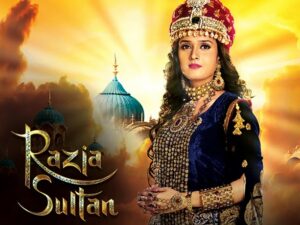
 India’s first female Sultana to sit on Delhi throne
How some people are treated by the historians is a matter of who writes the history and whether or not they are treated fairly. The story of Razia Sultan is an extraordinary one, but she too became just a flash in the annals because she was ahead of her time and was a woman whom the male dominated power players did not accept. This is her story you will find enchanting.
The annals of history are usually filled by the historians who have always kept an eye on their patrons whose favors they solicited and whose displeasure they did not want to face so it is hard to find an unbiased historian anywhere. It is also true in a vast country like India that has a rich history going back thousands of years, when honest historians have often paid a price for their honesty.
But today I will tell you about an incredible woman called Razia Sultan who became the only female ruler to sit on the throne in Delhi and in the whole Islamic world at a time when women were relegated to a subservient role that is still valid to a great extent. In doing so I have searched the history books and other sources of information to come up with the story of Razia that will astound you because I am writing about the year 1236 and not today.
In the recent history of the world there have been many female rulers and great leaders in many countries so everyone is familiar with the names like Queen Elizabeth II, Golda Meir, Indira Gandhi, Benazir Bhutto, Sheikh Hasina, Corazon Aquino, Angela Merkel among many others, but today I will write about a period long, long time ago when a female ruler to rule was so rare that makes you appreciate Razia even more considering what she had to put up with. In the Islamic world, a female is still relegated to a subservient role, although recently many women have started to assert their rights and many have proven to be worthy rulers in their own right.
You may have never heard of Razia Sultan because she ruled very briefly only for a few years and was killed by her numerous enemies who could not tolerate a female ruler giving them orders, so I consider her brief reign in the male dominated world of Muslim rulers in India like a flash, but what a bright flash it was!
What is more incredible is the fact that her father who was the Sultan had raised her not as a princess but as a future capable ruler who would someday occupy the throne to the chagrin and envy of her brothers and other aspiring nobles. She was educated in all kinds of subjects and trained to fight and ride like a man. She was tutored in the military as well as non-military matters by the best teachers available in the court, and was raised as an independent woman who was audacious in everything she did.
She rejected the title Sultana that was reserved for docile females in a secondary role, and proudly called herself Razia Sultan. Queen Hatshepsut would have been proud of her, as her father the Sultan obviously was. She did not veil herself to the dismay of the fanatic mullahs of her time and boldly sat on her throne as a decisive and assertive ruler that grated the Muslim world to no end. So they plotted to bring her down, in which her own frustrated brothers and half brothers were complicit.
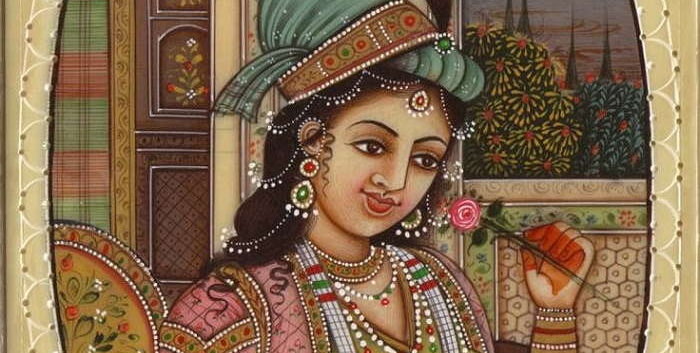
The only female queen, Razia Sultana, to sit on the throne of Delhi sultanate
Razia (r. 12361240), popularly known as Razia Sultana, was a Muslim ruler of the Delhi Sultanate in the northern part of the Indian subcontinent. She is the only woman to have held the throne in the Delhi Sultanate.
Razia was born to the Delhi Sultanate ruler Shamsuddin Iltutmish, a Turkic slave (mamluk) of his predecessor Qutb al-Din Aibak. Razias mother Turkan Khatun was a daughter of Qutb al-Din Aibak, and the chief wife of Iltutmish. Razia was the eldest daughter of Iltutmish, and probably his firstborn child.
Ascension to the throne:
Iltutmish had groomed his eldest son Nasiruddin Mahmud to be his successor, but this son died unexpectedly in 1229. According to historian Minhaj-i-Siraj, Iltutmish believed that his other sons were absorbed in pleasurable activities, and would be incapable of managing the state affairs after his death. While leaving for his Gwalior campaign in 1231, Iltutmish left his daughter Razia as in-charge of Delhis administration. Razia performed her duties so well that after returning to Delhi, Iltutmish decided to name her as his successor. Iltutmish ordered his officer mushrif-i mamlakat Tajul Mulk Mahmud Dabir to prepare a decree naming Razia as the heir apparent. When his nobles questioned this decision on the basis that he had surviving sons, Iltutmish replied that Razia was more capable than his sons.
A daughter of Sultan Shamsuddin Iltutmish, Razia administered Delhi during 1231-1232, when her father was busy in the Gwalior campaign. According to a possibly apocryphal legend, impressed by her performance during this period, Iltutmish nominated Razia as his heir apparent after returning to Delhi. Iltutmish was succeeded by Razias half-brother Ruknuddin Firuz, whose mother Shah Turkan planned to execute her. During a rebellion against Ruknuddin, Razia instigated the general public against Shah Turkan, and ascended the throne after Ruknuddin was deposed in 1236.
Razias ascension was challenged by a section of nobles, some of whom ultimately joined her, while the others were defeated. The Turkic nobles who supported her expected her to be a figurehead, but she increasingly asserted her power. This, combined with her appointments of non-Turkic officers to important posts, led to their resentment against her. She was deposed by a group of nobles in April 1240, after having ruled for less than 4 years. She married one of the rebels Ikhtiyaruddin Altunia and attempted to regain the throne but was defeated by her half-brother and successor Muizuddin Bahrām in October that year, and was killed shortly after.
India under Iltutmish
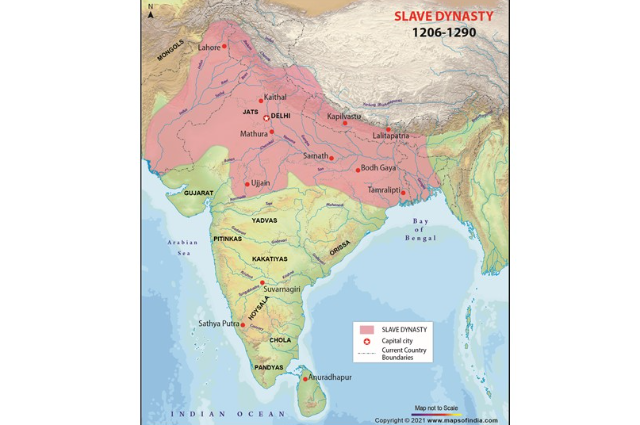
Razia Sultans sultanate in 1236
She issued her own coin, encouraged education for women and did many things to prove that she was an able ruler, but sadly she was way ahead of her time so the world at her time did not accept her. Razias ascension to the throne of Delhi was unique not only because she was a woman, but also because the support from the general public was the driving force behind her appointment. According to the 14th century text Fut uh-us-Salatin, she had asked the people to depose her if she failed to meet their expectations.

Coins issued by Razia Sultan during her reign
Overthrow:
The nobles who supported Razia intended her to be a figurehead, but she increasingly asserted herself. For example, her initial coins were issued with her fathers name, but by 1237-1238, she had started issuing coins solely in her own name. Isami mentions that initially, she observed purdah: a screen separated her throne from the courtiers and the general public, and she was surrounded by female guards. However, later, she started appearing in public dressed in traditional male attire, wearing a cloak (qaba) and a hat (kulah). She rode on elephants through the streets of Delhi, making public appearances like the earlier Sultans.
Razias increasing assertiveness and her appointment of non-Turkic people to important posts created resentment among the Turkic nobles The post of Amir-i Akhur had previously been held by officers of Turkic origin, and Yaqut was of Abyssinian origin: therefore, Razias Turkic officers resented this appointment. Chroniclers such as Isami, Sirhindi, Badauni, Firishta, and Nizamuddin Ahmad attribute Razias intimacy with Yaqut as a major cause of her downfall.
In 1238-1239, Malik Izzuddin Kabir Khan Ayaz the governor of Lahore rebelled against Razia, and she marched against him, forcing him to flee to Sodhra. Because the area beyond Sodhra was controlled by the Mongols, and because Razia continued to pursue him, Izzuddin was forced to surrender and accept Razias authority once again. Razia treated him leniently: she took away the iqta of Lahore from him, but assigned him the iqta of Multan, which Iltutmish had assigned to Ikhtiyaruddin Qaraqash Khan Aitigin.
Razia had recalled Ikhtiyaruddin Aitigin, a Turkic slave purchased by Iltutmish, to her court in Delhi, and made him Amir-i Hajib. She had also bestowed favors upon another slave of Iltutmish Ikhtiaruddin Altunia, assigning him first the iqta of Baran, and then, the iqta of Tabarhinda. However, these two officers conspired with other Turkic officers to overthrow her, while she was away on the Lahore campaign. Razia arrived in Delhi on 3 April 1240, and came to know that Altunia had rebelled against her in Tabarhinda. Unaware that other nobles in Delhi had joined Altunia in conspiring against her, Razia marched towards Tabarhinda ten days later. At Tabarhinda, the rebel forces killed her loyalist Yaqut, and imprisoned her. According to Minhaj, Razia ruled for 3 years, 6 months, and 6 days.
Alliance with Altunia and death:
When the news of Razias arrest reached Delhi, the rebel nobles there appointed Muizuddin Bahram a son of Iltutmish on the throne. He formally ascended the throne on 21 April 1240, and the nobles pledged allegiance to him on 5 May 1240. The nobles expected the new king to be a figurehead, and intended to control the affairs of the state through the newly-created office of naib-i mamlakat (equivalent to regent), which was assigned to Ikhtiyaruddin Aitigin. However, the new king had Aitigin assassinated within 12 months.
After deposing Razia, the nobles at Delhi had distributed important offices and iqtas among themselves, ignoring claims of Ikhtiyaruddin Altunia, who had arrested Razia as Tabarhinda. After Aitigins death, Altunia lost all hope of realizing any benefits from Razias overthrow, and decided to ally with her. Razia also saw this as an opportunity to win back the throne, and married Altunia in September 1240. The two were supported by some other disgruntled Turkic nobles, including Malik Qaraqash and Malik Salari.
Altunia assembled an army, which, according to Isami, included Khokhars, Jats, and Rajputs. In September-October 1240, Sultan Muizuddin Bahram led an army against the forces of Altunia and Razia, and defeated them on 14 October 1240. Altunia and Razia were forced to retreat to Kaithal, where they were deserted by their soldiers, and killed by Hindus. Razia was killed on 15 October 1240.

It is speculated that she might have been disinterred from Kaithal and then reburied at her Delhi tomb as shown below.

Tomb of Razia Sultan next to her sister in Old Delhi
The grave of Razia is located at Mohalla Bulbuli Khana near Turkman Gate in Old Delhi. The 14th century traveler Ibn Batuta mentions that Razias tomb had become a pilgrimage center: a dome had been built over it, and people sought blessings from it.
Razias grave is said to have been built by her successor and half-brother Bahram. Another grave, said to be of her sister Shazia, is located beside her grave. Razia was a devotee of the Sufi saint Shah Turkman Bayabani, and the place where she is buried is said to be his hospice (khanqah).
Today, the site is largely neglected: the Archaeological Survey of India performs annual maintenance to it but has been unable to beautify it further because it is surrounded by illegal construction, and is approachable only through a narrow, congested lane. In the late 20th century, the local residents constructed a mosque near it.
If you go to Delhi today and look for her grave, you will not find it easily. Finally, when you find it after searching for a long time and approach it through a narrow lane, you will be surprised at the shabby pile of stones under which a great Sultan of India is buried. There is no adornment for such a royal tomb and most people pay scant attention to it. The foreign tourists as well as the locals probably have never heard of her, as if she had been relegated to the trash bin of history. It is a pity for such a beautiful queen.