

Holi is the most colorful festival in India
A country like India has many facets to it. It has the physical beauty, the rich cultural heritage, the landmark world heritage sites, the religions, the wildlife, the flora and fauna, the rich heritage of the tribes, the festivals that people enjoy, the diverse food, the languages, the clothing’s, the art and handicraft etc. all make up many facets of a country. I will present mostly the sheer physical beauty of India.
India evokes many emotions in my heart. The sound of cuckoo birds and peacocks, its green fields where you can see the Nilgai placidly munching on grass, its lofty snow clad peaks of the mountains in the north, the lush Eastern and Western ghats covered in emerald green tea gardens, its Thar Desert and the salt pans, the majestic and astounding forts of Rajasthan, the crystal clear lake of Dahl in Sri Nagar and lofty peaks, its forests where lions and tigers roam freely, its extraordinary beauty and its varied people, their customs, traditions and culture, numerous religions all make India a unique country that evokes nostalgia in anyone living abroad. People who have never visited India have no idea how beautiful the country is and what it has to offer to dazzle your senses.
I have seen India changing over a period of 70 years from the days of poor connectivity, poor roads and infrastructure to a modern India that is transforming the country at a breakneck speed creating world records every day in mega engineering projects all over the country. It is a country now going digital in a way unseen elsewhere in the world, where almost all the services are going online, where the young people are Internet savvy, where changes in every sphere are coming faster than people can cope, where new laws have been enacted to unify the country through uniform education system, uniform goods and services tax, uniform nationwide ID system that allows access to all government services including banking, farmer protection laws, universal health care for all citizens, massive housing schemes for the poor, roads and electric connectivity to all the villages, new dedicated freight corridors to transport freight all over the country from ports to consumers, new airports everywhere are some of the changes that have taken place since I left the country some 50 years ago. India will soon have nationwide uniform civil and criminal laws.
The new superhighways and high-speed trains connect to all parts of the country, where most people still travel by trains or buses. The phone connectivity has improved in a way no one had foreseen before the age of fiber optic cables that give you instant connection nationwide and worldwide. Millions of people in urban and rural areas carry cell phones that connect them to anyone anywhere, anytime, instantly.
It is a fast-developing country that is technologically advanced and sends missions to the Moon and beyond using its own rockets and satellites and is a militarily strong nation to take on any challenges.
When I was a child, I used to see the dolphins playing in the Yamuna River when there was no awareness of their value and importance among the poachers but now slowly the awareness has come, and they are being protected in the rivers of India. I used to hear the call of wolves and hyenas near the cities, but they have gone away to more forested areas as the population has grown and cities expanded.
Wild bears are captured to make them dance
Wild bears are captured and used by nomads to earn a living, but it also decimates the bear population although now they are protected animals.
I used to see the bears and other wild animals that the nomads used to exploit to gain a small living, but that too has changed, so now the bears are protected in sanctuaries where they are given all the care they need. You can still see the peacocks in vast gardens in any city where they show off their dazzling colors and move around freely because they are protected. The tiger and lion population is slowly increasing in national parks that are numerous and guarded by armed park rangers so that is very good news in a country where poaching still goes on.
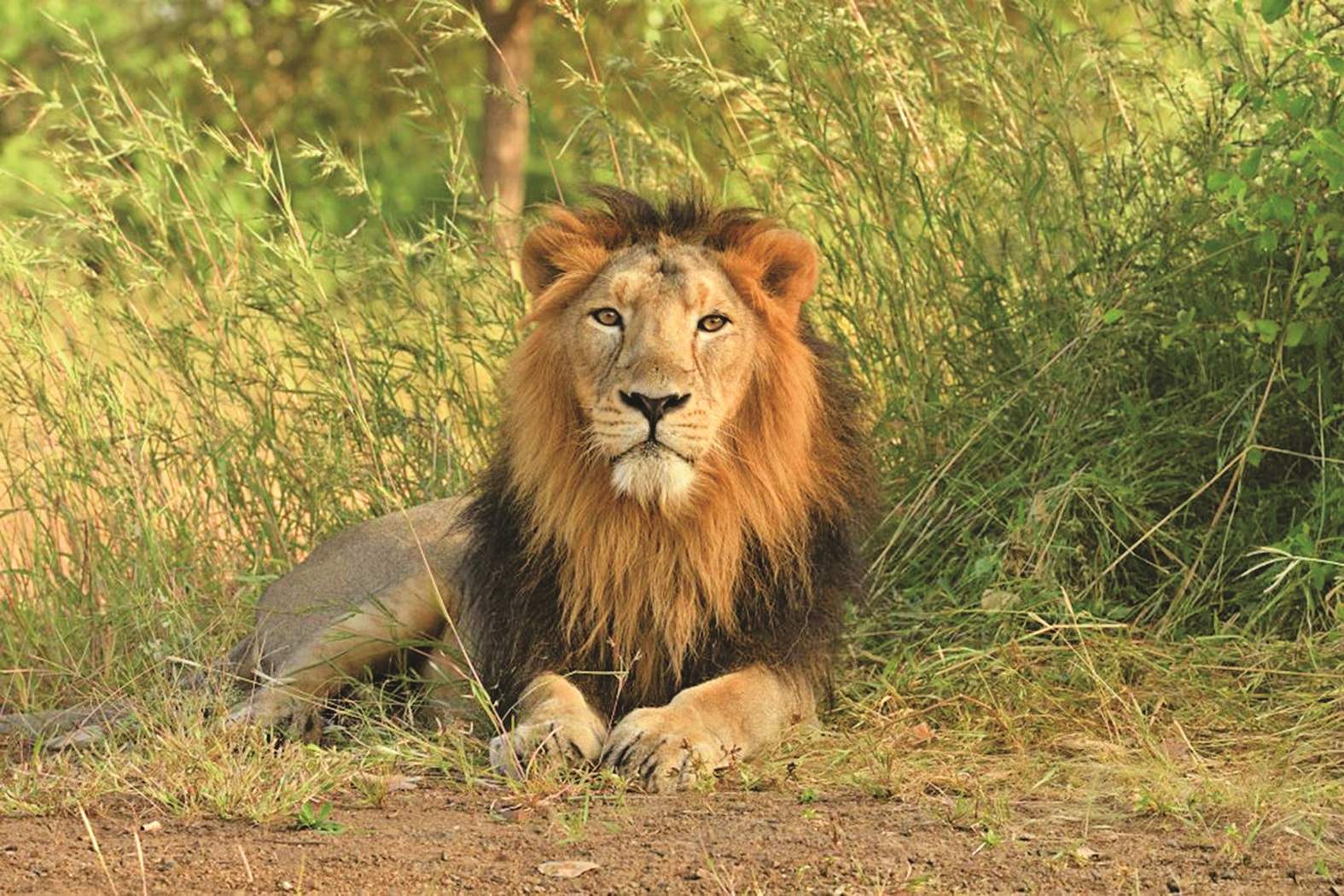
The lions of Gir Forest
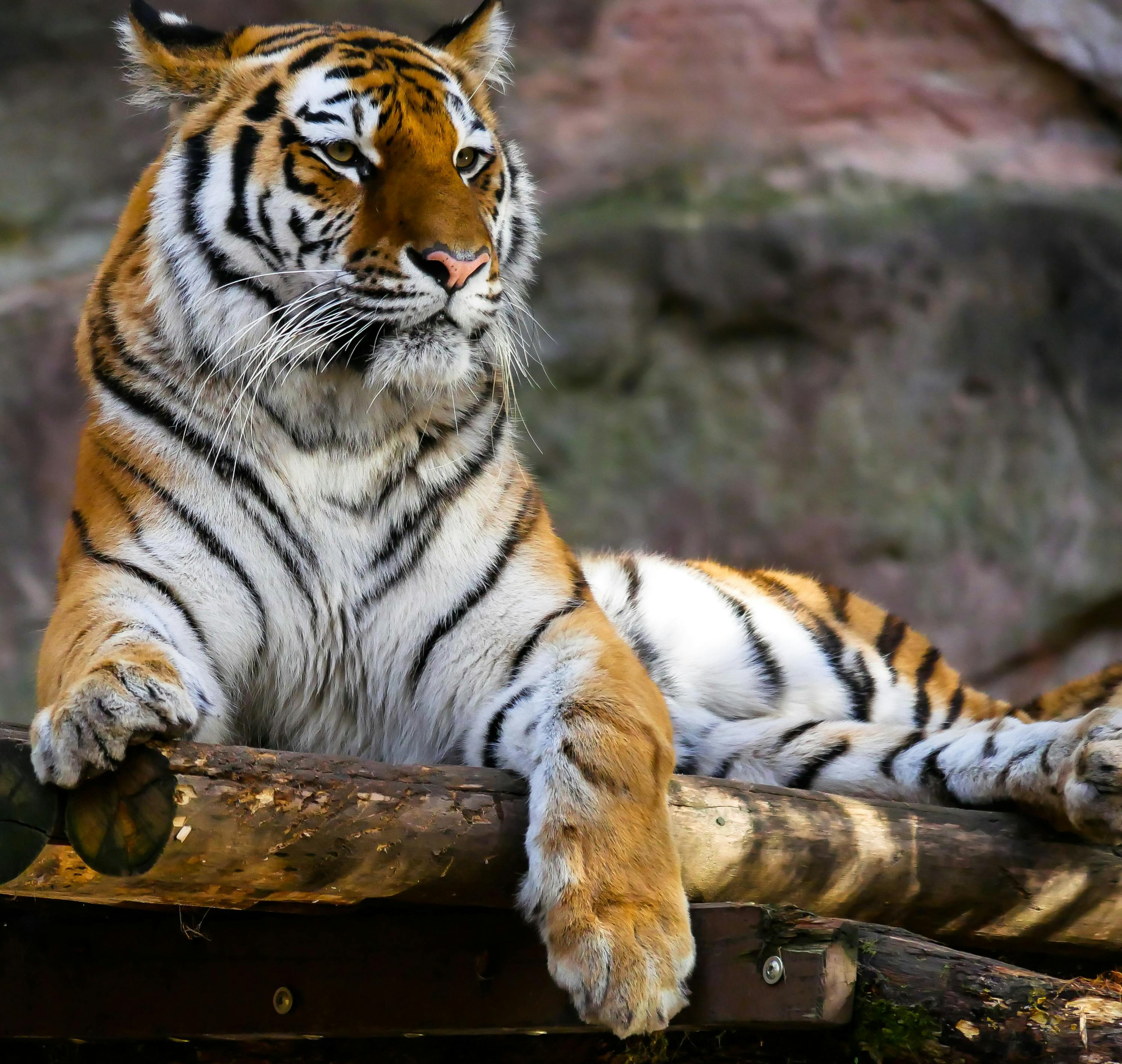
The Royal Bengal tigers
The captive crocodile and gharial breeding program of the government has helped save the animals and their numbers are increasing as well. The breeding farms later release the crocs and gharials into the wilderness, where they grow up naturally.
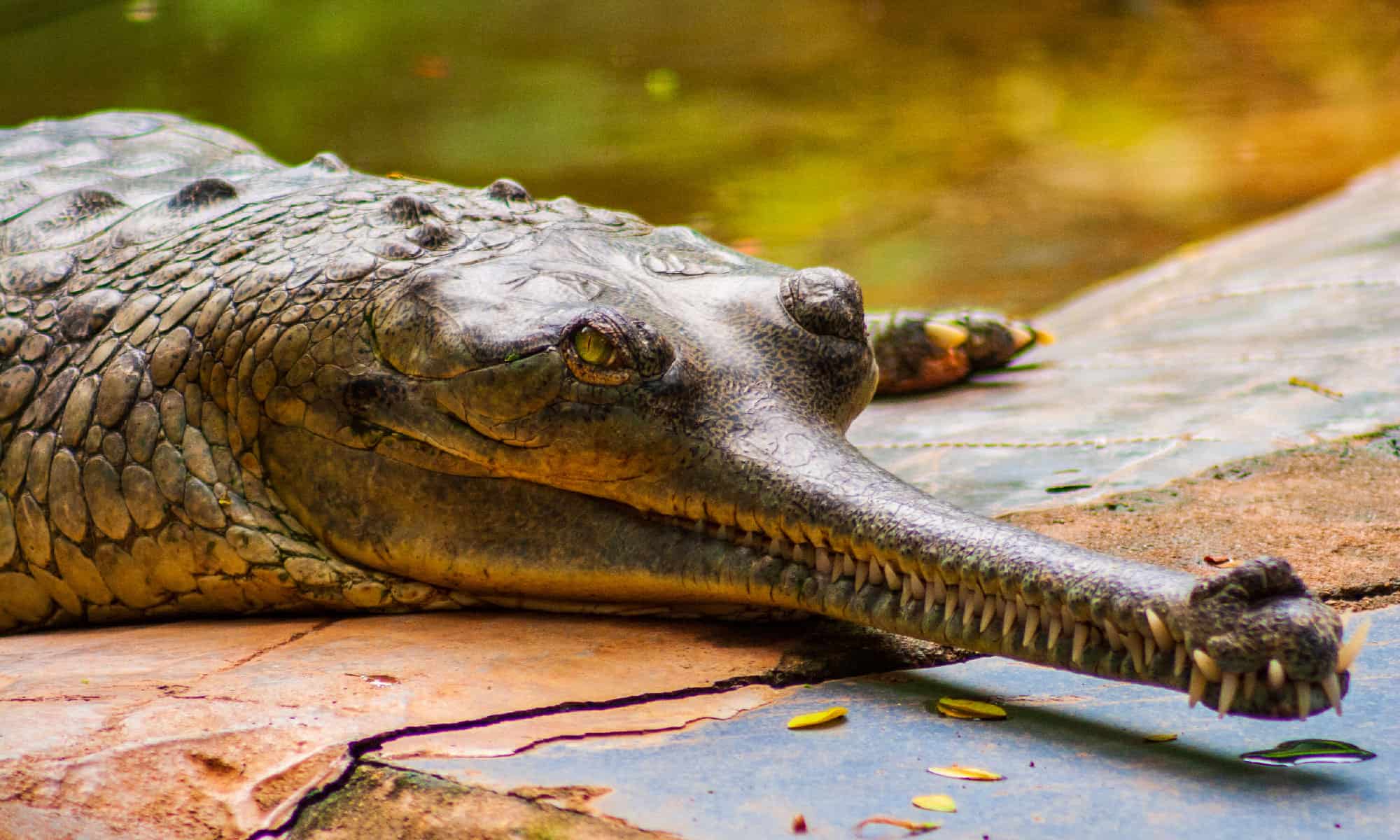
The gharials are now protected and their numbers are increasing
The elephants, rhinoceros, cheetahs, jaguars, leopards, mountain lions, panthers, red pandas, numerous species of deer, hyenas, foxes, wolves and other wildlife are now protected so they too are increasing in numbers.
There was a time thousands of years ago when the population was small and the forest cover was extensive where the animals and the tribal people lived in harmony, but that has changed. Still, there are many national reserve parks and forests where one can see wildlife like lions and tigers any time. While some tribal people still live in forested areas, most of them seek employment in cities and villages where they reside.
Victim of poaching
It is sad to know that many species of wildlife have come to the brink of extinction like the Ganga River dolphins, tigers, cheetahs, leopards and rare jaguars because of poachers. They operate with impunity and kill the rare animals to sell their skins in the black market.

Ganga River dolphins face extinction due to poaching
Once I was flying to Paris from Delhi when a fellow sitting next to me showed that he had a tiger skin that he somehow got through the authorities at the airport. I was shocked and felt sorry for the magnificent tiger that gave its life so that its skin could be sold to a Frenchman.
The government is trying hard to stop this illegal trade and has put many poachers in jail, but the trade is very lucrative, so it continues unabated.
Fortunately, many types of animals are thriving and multiplying
under protection while new species of Cheetahs have been introduced in the national parks from Namibia at a great cost.
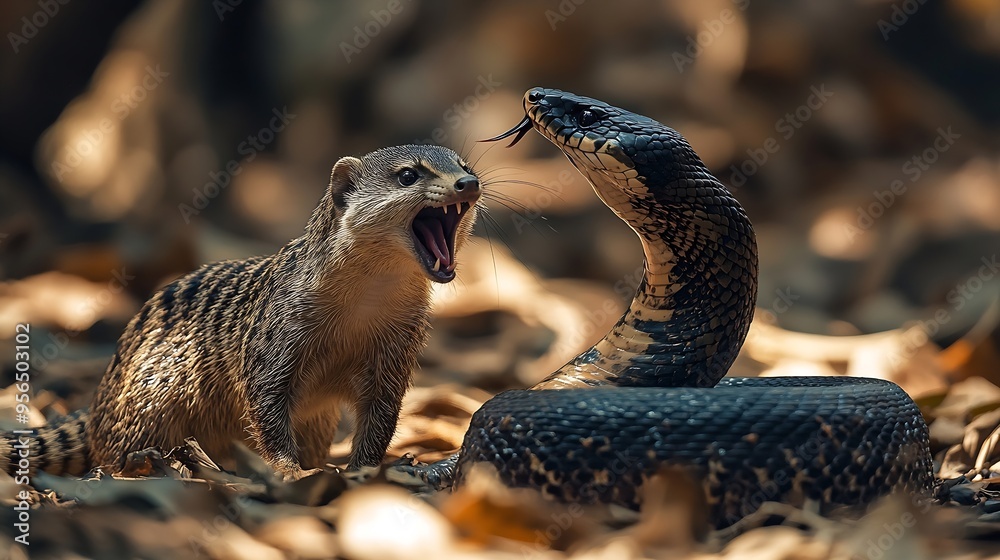
Snakes and mongoose are commonly found
We can still see the snake and mongoose fights in India. There was mongoose in our garden that were wild.
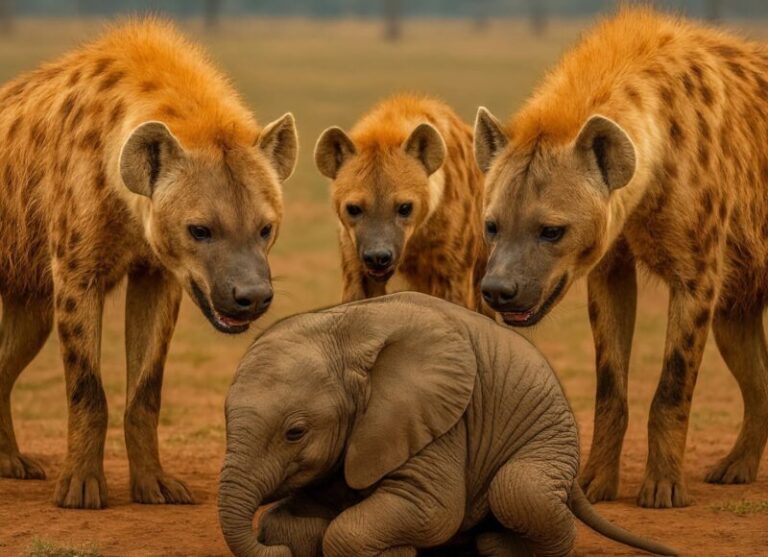
Hyaenas are found in many regions of India. I could hear them during the night but now they have retreated to forests. I could hear the howls of wolves also, but they too have moved away from populated areas.
:max_bytes(150000):strip_icc()/GettyImages-518423452-2ca3d69942614783b8790a294172ba7a.jpg)
One cannot imagine India without elephants. They are wild but some are domesticated and used for ceremonial reasons. British used them when they went hunting tigers, leopards and cheetahs
Thus, the India I knew has drastically changed due to large scale infrastructure development all over the country, but I still miss the old India I knew.